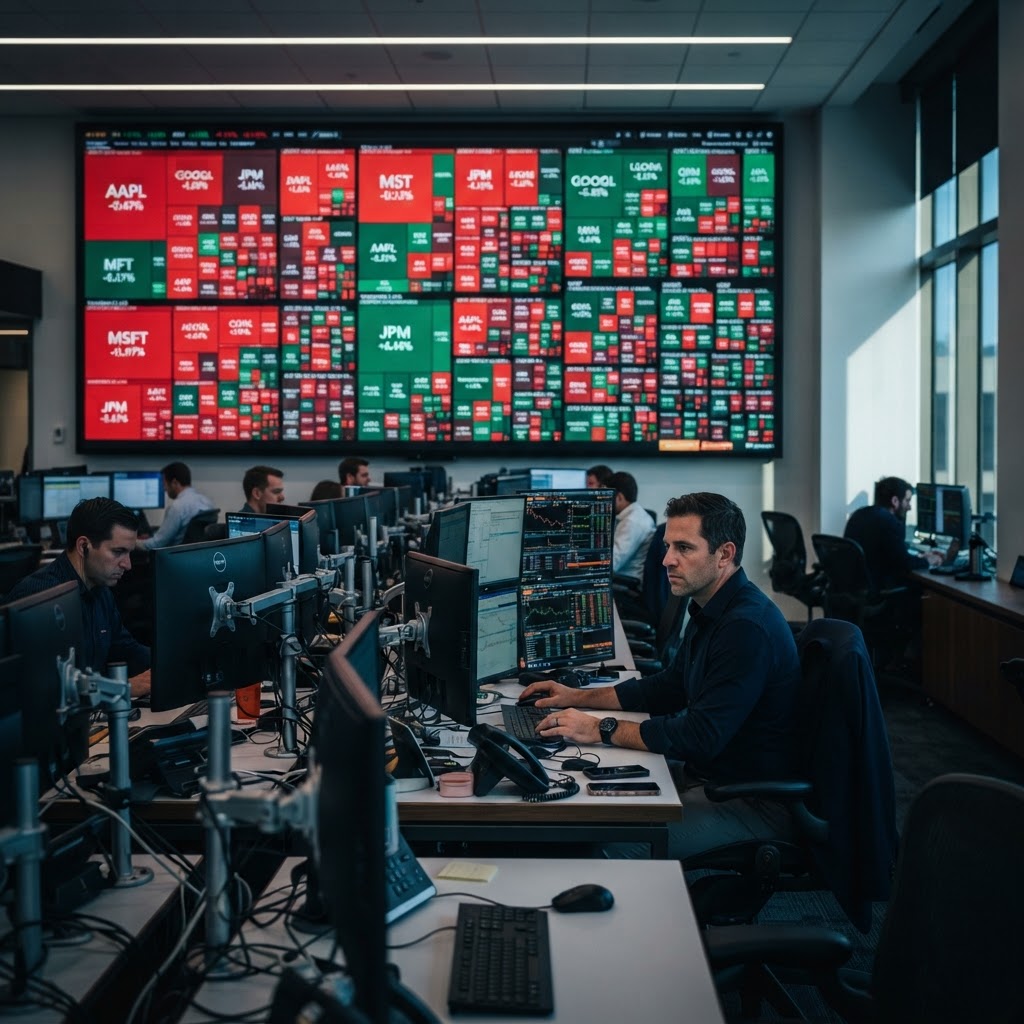
Fed Interest Rate Decision July 2026: Navigating the Warsh Era
As the Federal Open Market Committee (FOMC) prepares to meet on July 28–29, the global financial community is fixated on the Fed interest rate decision July 2026. This meeting marks a critical juncture for Chair Kevin Warsh, who inherited a complex macroeconomic landscape characterized by uneven growth and stubborn price pressures. The central question facing the committee—and by extension, every institutional and retail investor—is whether the Fed will prioritize the cooling labor market indicated by June’s weak payroll data or remain steadfast against "sticky" inflation that refuses to return to the 2% target.
The market consensus, which was leaning toward a dovish pivot earlier this spring, has been upended. Investors are now seeking clarity on whether the Warsh-led Fed will opt for a "tactical pause" to assess the damage in the labor sector or deliver a "hawkish hike" to crush the remaining embers of inflation.
Analyzing the Fed Interest Rate Decision July 2026: Growth vs. Inflation
The July 2026 meeting is uniquely challenging due to the divergence in recent data points. On one hand, the Bureau of Labor Statistics recently reported that June non-farm payrolls grew by a meager 95,000, well below the 150,000 expected by analysts. Simultaneously, the unemployment rate ticked up to 4.4%, a level that historically signals the early stages of a cyclical slowdown.
On the other hand, the Personal Consumption Expenditures (PCE) price index—the Fed’s preferred inflation gauge—showed a month-over-month increase that suggests core inflation remains entrenched at 3.1%. For Chair Warsh, who has built his reputation on a commitment to price stability and transparent communication, this "stagflationary lite" environment offers no easy exits.
The "Warsh Doctrine" and Policy Credibility
Since taking the helm, Chair Warsh has emphasized a "rules-based" approach to monetary policy, moving away from the more discretionary style of his predecessors. His speeches have highlighted the importance of real interest rates remaining in restrictive territory until inflation expectations are firmly anchored. Consequently, the Fed interest rate decision July 2026 will be viewed as a litmus test for his leadership. A pause might be interpreted as a concession to political pressure or growth fears, while a hike could be seen as an unnecessary risk to an already softening labor market.
Potential Scenarios for the July FOMC Meeting
Market participants are currently pricing in three primary scenarios for the end of the July 29 session:
1. The "Wait-and-See" Pause (45% Probability)
In this scenario, the FOMC maintains the federal funds rate at its current range (5.25%–5.50%). The accompanying statement would likely acknowledge the weakness in the June jobs report while reiterating that the committee remains "highly attentive to inflation risks." This would allow the Fed to gather more data before the September meeting, avoiding a potential policy error in either direction.
2. The Hawkish 25-Basis-Point Hike (35% Probability)
Chair Warsh may argue that the "stickiness" of services inflation requires one final push to ensure the 2% target is reachable by 2027. A hike in July would signal to the bond market that the Fed is not intimidated by a cooling labor market, prioritizing its price stability mandate above all else. This would likely lead to a flattening of the yield curve as long-term growth expectations diminish.
3. The Dovish Pivot (20% Probability)
While unlikely, a surprise signal of future rate cuts could occur if the internal Fed data suggests the June jobs report wasn't an anomaly, but rather the start of a broader contraction. However, given the current inflation print, most institutional desks view this as a low-probability event for the July window.
Strategic Positioning Ahead of the Fed Interest Rate Decision July 2026
For investors, the volatility surrounding the Fed interest rate decision July 2026 requires a disciplined approach to asset allocation. The transition of leadership to Kevin Warsh has already introduced a higher degree of "term premium" into the bond market, and the July decision will likely exacerbate this trend.
Fixed Income Considerations
If the Fed pauses but maintains a hawkish tone, short-duration Treasury bills remain an attractive "safe harbor," offering high yields with minimal interest rate risk. However, if Chair Warsh signals that the peak of the cycle has been reached, locking in yields on the 10-year Treasury may be a prudent move before the market begins pricing in a 2027 easing cycle.
Equity Market Resilience
Equity markets have shown remarkable resilience, but the "higher-for-longer" narrative remains a headwind for growth stocks with high valuations. Investors should consider tilting portfolios toward "quality" factors—companies with strong cash flows, low debt-to-equity ratios, and the pricing power to navigate sticky inflation. Defensive sectors like healthcare and utilities traditionally perform better during the uncertainty of a mid-cycle Fed transition.
The Role of Real Assets
With inflation remaining above the 2% target, real assets—including commodities and infrastructure-linked equities—provide a necessary hedge. If the July decision leans toward a pause despite high inflation, the dollar may weaken slightly, providing a tailwind for gold and other hard assets.
Key Takeaways for Investors
As the July 28-29 meeting approaches, keep the following points in focus:
- Labor Market vs. Inflation: The Fed is caught between a softening jobs market (4.4% unemployment) and stubborn inflation (3.1% PCE). The decision will reveal which mandate currently takes precedence.
- The Warsh Factor: Expect a more hawkish-leaning framework than in previous years. Chair Warsh is unlikely to pivot toward cuts until inflation is demonstrably defeated.
- Data Dependency: The "dot plot" and the Summary of Economic Projections will be secondary to the Chair’s press conference rhetoric regarding the June jobs "anomaly."
- Portfolio Health: Maintain a balance of short-term liquidity and quality equities. Avoid over-leveraging in anticipation of a rate cut that may not arrive until late 2026 or early 2027.
The Fed interest rate decision July 2026 is more than just a number; it is a signal of the central bank's resolve under new leadership. By understanding the mechanics of this decision, investors can navigate the coming volatility with confidence and institutional-grade clarity.
Ready to Analyze Your Next Investment?
Get a free AI-powered fair value analysis on any stock. See intrinsic value, margin of safety, and institutional-grade risk metrics in seconds. No credit card required.
Want full access to our institutional research tools? Explore Invest Daily Pro.
You're tracking market trends. Find the best opportunities right now.
The scanner runs 200+ filters across every major asset class to surface high-conviction setups that match current macro conditions - updated every market day.
Watch: Related Videos
from Invest DailyGet This Analysis in Your Inbox Every Morning
Get our daily market briefing with institutional-grade analysis, key developments, and actionable strategy - delivered before the opening bell.
Essential Reading: Top Investor Guides
Our most comprehensive guides - start here to build a complete investing foundation.
Market Basics
Stock Market Fundamentals: How Markets Work, Reading Charts, and Technical Analysis
Portfolio Strategy
Portfolio Management Masterclass: Asset Allocation, Diversification, and Rebalancing
Retirement
The Complete Retirement Planning Guide: 401(k), IRA, Roth, and FIRE Strategy
Dividend Income
The Ultimate Guide to Dividend Investing: How to Build a Safe Income Portfolio
Valuation
The Complete Guide to Stock Valuation: How to Calculate Intrinsic Value
Financial Statements
How to Read a Balance Sheet Like a Professional Analyst
Monetary Policy
Understanding the Federal Reserve: How Monetary Policy Actually Works
Real Estate
Real Estate Investment Trusts (REITs): A Complete Investor's Guide
Options & Hedging
Options Basics: How to Use Derivatives to Protect Your Portfolio
Investor Psychology